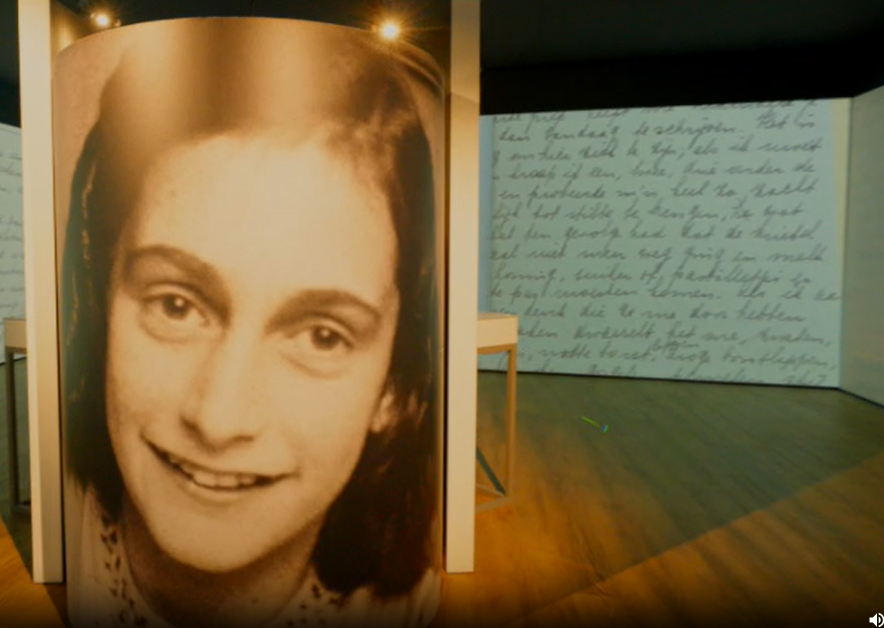
Anne Frank was a lively, curious, and energetic teenager who enjoyed spending time with her friends and going to school. Like many teenagers, she was discovering herself and experiencing the challenges of growing up.
But her life changed when Nazi Germany invaded the Netherlands in May 1940. Under Nazi occupation, Jewish families faced increasing restrictions and persecution.
On July 6, 1942, Anne, her older sister Margot, and their parents, Otto and Edith Frank, went into hiding in a secret annex inside the building that housed her father’s business in Amsterdam.
A week later, they were joined by Hermann van Pels, an associate of Otto Frank, along with his wife, Auguste, and their teenage son, Peter. Another acquaintance of the Frank family, Fritz Pfeffer, joined them in November 1942.
For more than two years, the eight people lived together in the confined space, unable to go outside and constantly fearing discovery.
Anne spent much of her time trying to cope with isolation, the challenges of sharing a small living space and the uncertainty of the war.
She also spent her days writing in what would become her famous diary. In it, she documented everyday life inside the Annex, her thoughts and emotions, news about the war that she heard on the radio, and her developing romance with Peter van Pels.
Although Anne sometimes questioned whether anyone would be interested in her writing, she eventually began revising her diary with hopes of publishing it after the war.
But Anne would never have the opportunity to tell her story herself.
On August 4, 1944, the eight people hiding in the Annex were discovered and arrested by Nazi authorities. They were later deported to concentration camps.
Anne died at the Bergen-Belsen concentration camp in Germany in February 1945 at the age of 15.
Her father, Otto Frank, was the only one of the eight people in hiding to survive the war. He later arranged the publication of Anne’s diary in 1947, sharing her experiences with millions of readers worldwide.
Anne Frank’s story comes to Chicago
Now, visitors can experience a recreation of the Secret Annex at the Griffin Museum of Science and Industry in Chicago, Illinois.
Anne Frank The Exhibition, presented by the Anne Frank House in Amsterdam, features a full-scale, furnished recreation of the rooms where Anne, her family and the four other Jewish inhabitants spent more than two years in hiding.
The exhibition also includes multimedia presentations, photographs, films, sound recordings and more than 130 original collection items from the Anne Frank House.
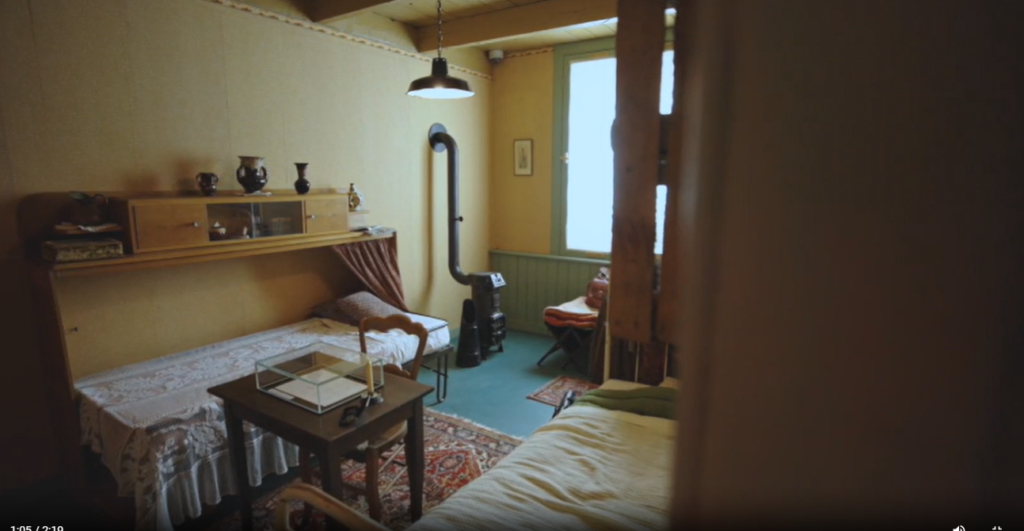
Griffin Museum of Science and Industry
Among the details featured in the recreation are Mrs. van Pels’ dress hanging in a closet, Peter van Pels’ bicycle near the attic, and a board game representing the families’ rare moments of fun and normalcy.
The exhibit provides visitors with a closer look at everyday life inside the Annex while exploring the historical events that led to the Nazi occupation of the Netherlands and the persecution of Jewish people during World War II.
“For Anne Frank, her family and the other inhabitants of the secret Annex, and so this exhibition not only lets visitors understand the context of the times in which all of this was happening, that leads up to World War II and the Nazi occupation of Amsterdam, but also what life was like for Ann and the other inhabitants in a fully furnished secret Annex that gives them the opportunity to see what life was like them for this period of a little over two years,” said Voula Saridakis, Ph.D., head curator of Collections and Archives at the Griffin Museum.
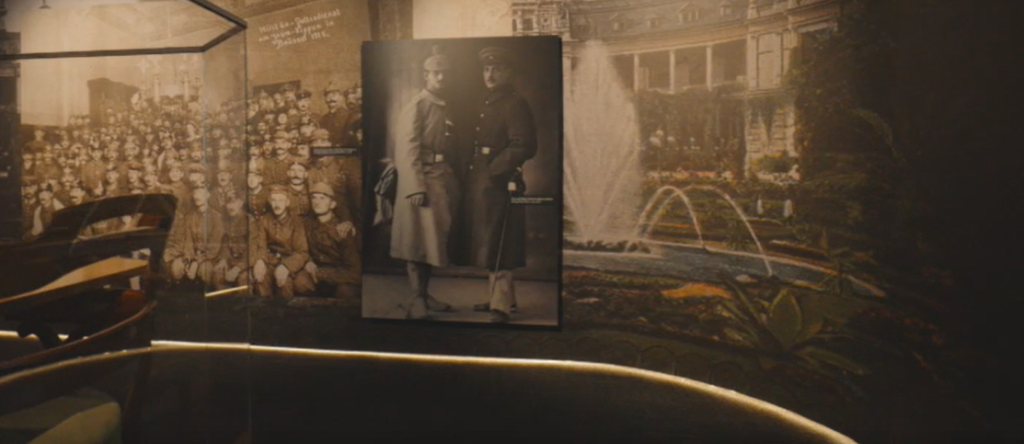
Griffin Museum of Science and Industry
The Griffin Museum of Science and Industry is the first museum in the Midwest to present the exhibition and only the second location in the United States to host it.
The museum is also using the exhibition as an educational opportunity for students.
According to museum publicity materials, more than 16,000 students have visited the exhibition.
The museum offers free exhibition admission to school groups with advance reservations. Its Bus Scholarship Program also provides transportation assistance to eligible schools, helping students who might otherwise have difficulty visiting the museum.
The exhibition opened in Chicago on May 1, 2026, and will remain on display through January 31, 2027.
Exhibition tickets are free through October 2026, although regular museum admission is required.
Beginning in November, exhibition tickets will cost $19 for adults, $15 for children ages 3 to 18 and $9.50 for members. Explorer Society members receive one free visit, while Catalyst Society members and higher receive free admission. Visitors can also purchase a $10 Flex Pass upgrade for untimed, express entry.